
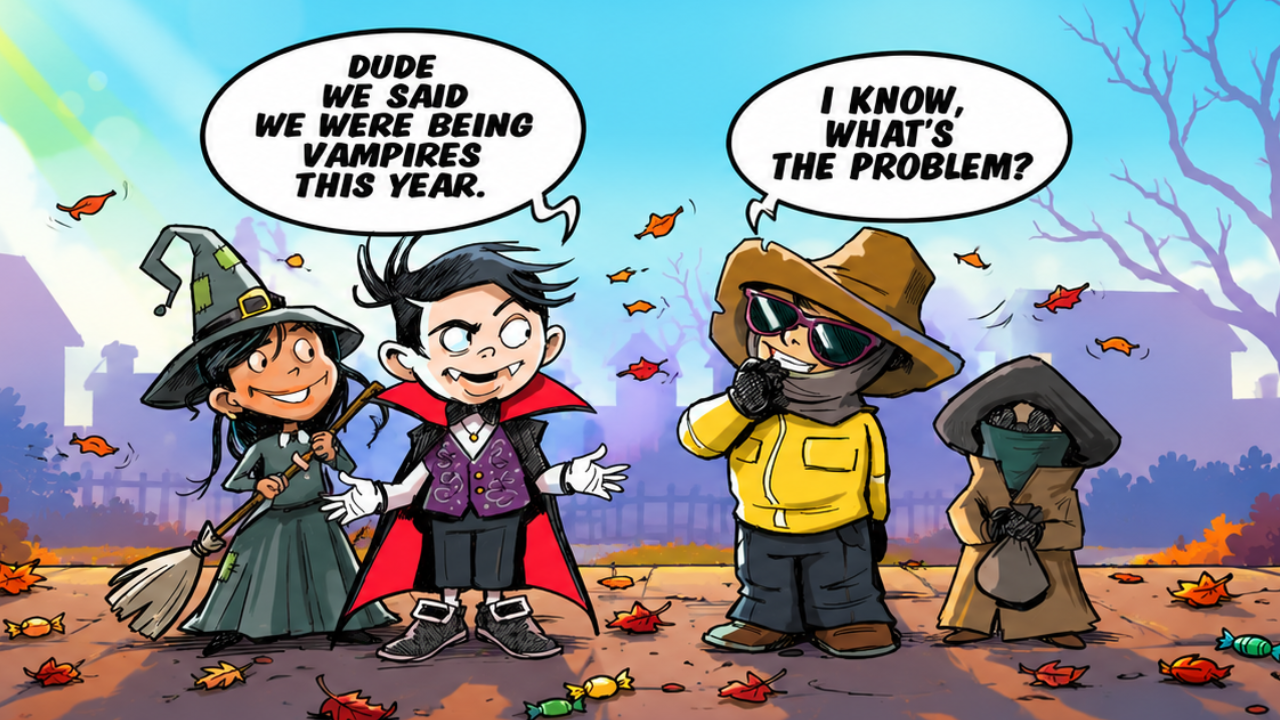
Porphyria, Trick or Treat and the Power of Self-Acceptance
Why one of Halloween’s most recognizable characters might have something to teach us about embracing the very things that make us different.
An Op-Ed By Craig Leppert - October 30th, 2026The past eight months have been an incredible time for us here at Shadow Jumpers, particularly for those living with the rare photosensitive condition Erythropoietic Protoporphyria (EPP). Between the success of our third annual Sun Escape Weekend and the continued push for FDA approval of Disc Medicine's Bitopertin, our community has experienced an unprecedented level of visibility.
We have had EPP’ers appeared on local and national television, watched stories about our community circulate across social media, collectively reaching more than a million impressions and reactions from people far beyond our little corner of the photosensitive world and we even had someone featured in PEOPLE (though lets try and not inflate that guy’s ego any further).
The response to these stories is overwhelmingly positive. Encouragement, curiosity, admiration, and support tend to dominate the comments. But every so often, one of these stories breaks containment. It escapes the familiar likes and reshares of our photosensitive community and makes its way into the great unknown: the larger world of people who collectively respond with one bewildered question.
“Huh?”
For someone who has never encountered a person "allergic to the sun," whether personally or through six degrees of separation, the concept can be genuinely difficult to comprehend. "How can someone be allergic to the sun?" "How can you not go outside during the day?" "There's no way that's actually real."
Most of us have heard some variation of these questions hundreds of times throughout our lives. And honestly, they're easy enough to handle. You can shake them off, laugh, or politely try and explain the science.
"It's actually a rare blood disorder."
"There's a problem with an enzyme involved in producing heme."
"Basically, light-sensitive molecules called protoporphyrins accumulate in the body, and when sunlight reaches them through the skin, they trigger a painful photochemical reaction."
All of which is considerably more information than Instagram user @WhoopDereItIs999 ever expected to receive in his replies (or will ever bother reading).
For most people with EPP, and many others living with photosensitivity, this initial disbelief is nothing new. It's part of introducing yourself to a new teacher, explaining your condition to a coworker, or navigating an unfamiliar social environment. But it's often the second wave of comments that divides our community. Not necessarily because of what those comments say, but because of what we believe they represent. And, of course, those comments almost always involve one particular character, Vampires.
The Elephant Vampire in the Room
When it comes to our Sun Escape Weekend, we've received the occasional comment; “So, this is vampire camp?" or "Can families from Transylvania attend?" Across the many social media stories featuring our EPP friends, the comments can become even more creative. And there's no time of year when these comparisons become more unavoidable than Halloween.
For one day, or one week, or an entire month depending on your level of commitment, society gives itself permission to abandon everyday routines, embrace the supernatural, and playfully celebrate the things that ordinarily frighten us on this holiday.
Halloween's roots stretch back more than 2,000 years to traditions associated with the ancient Celtic festival of Samhain. Over the centuries, those customs intertwined with Christian observances surrounding All Saints' Day, eventually developing into the holiday we recognize today.
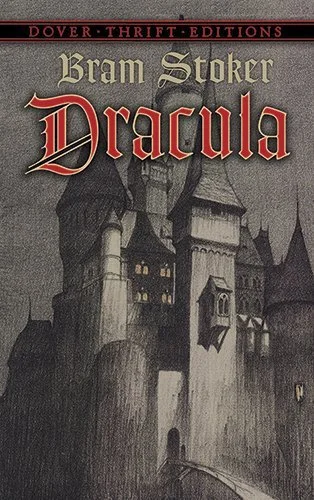
Vampires, meanwhile, have haunted human imagination for centuries. Stories of blood-drinking spirits and creatures that prey upon the living appeared in ancient cultures long before the modern vampire took shape. Accounts of supposed vampires in Eastern Europe eventually spread across the continent, helping establish the mythology that would inspire Bram Stoker's Dracula in 1897.
And since then, it's paid PRETTY well to be in the fang business.
Dracula has appeared in hundreds of films, while vampire-centered entertainment has produced some of the most recognizable franchises in pop culture. From Buffy the Vampire Slayer to The Twilight Saga, The Vampire Diaries, What We Do in the Shadows, and Hotel Transylvania, vampires have demonstrated a remarkable ability to reinvent themselves for each new generation.
This year, an estimated 4.2 million American adults plan to dress as vampires for Halloween, making the character one of the country's most popular costume choices year over year, trailing only witches.
That's millions of people voluntarily dressing up as fictional creatures whose defining characteristics include avoiding sunlight, staying indoors during the day, and maintaining a rather complicated relationship with their own biology. Sound familiar?
The Curious Case of Porphyria and Vampires
The relationship between vampires and photosensitivity extends beyond fictional storytelling and sarcastic Instagram comments. It actually became the subject of a controversial medical theory that captured international attention in 1985. That year, biochemist Dr. David Dolphin suggested that certain forms of porphyria, a group of rare disorders affecting the body's production of heme, might have contributed to historical vampire folklore.
Dolphin pointed to similarities between descriptions of vampires and symptoms associated with some porphyrias, including extreme sensitivity to sunlight and, in certain severe forms, physical disfigurement. He even speculated about the relationship between blood consumption and the underlying biological processes involved.
The theory attracted widespread media coverage, including reporting in The Washington Post, but medical experts challenged its scientific validity. In particular, the suggestion that drinking blood could alleviate porphyria symptoms lacked a credible medical foundation (yeah, that was crazy Dolphin). Nevertheless, the idea has proven remarkably difficult to bury.
The supposed connection has continued to appear in scientific discussions, entertainment, and popular media decades later. As recently as 2024, the American Chemical Society revisited the mythology, while Netflix's Midnight Mass incorporated a fictionalized medical explanation reminiscent of porphyria into its supernatural storyline.
To be clear, there is no established scientific or historical evidence that porphyria created vampire folklore. But it's not difficult to understand why the comparison persists.
Vampires provide an instantly recognizable cultural reference for a medical condition that most people have never encountered. It's the same reason many of us with EPP simply introduce our condition by saying, "I'm allergic to the sun."
Technically, that's not what EPP is. It's a genetic disorder affecting heme production. But explaining the full science to someone you've just met isn't always practical. Sometimes you need a shortcut. And from personal experience, I can tell you that introducing myself as someone allergic to the sun usually produces two responses in rapid succession.
First: "Wait... are you serious?" Followed almost immediately by: "So... you're basically a real-life vampire?" My response? "Yes. And you wouldn't believe how many people are actually offended by that comparison."
When a Joke Becomes a Stigma
Those who dislike the vampire comparison often point to the stigma surrounding porphyria. They worry that connecting a legitimate medical condition to supernatural folklore encourages misinformation, trivializes their experiences, or reinforces the perception that their condition is too bizarre to be taken seriously.
Some have expressed concerns that these comparisons could even influence how medical professionals perceive porphyria, particularly in a world where patients already struggle to obtain accurate diagnoses and appropriate care.
These concerns deserve acknowledgment.
Anyone who has spent time like myself advocating for people with porphyria understands how desperately we need greater medical awareness, particularly among primary care providers and other professionals who may encounter these conditions only rarely.
And when someone has spent years having their pain questioned, their symptoms misunderstood, or their experiences minimized, a comment about being a vampire may not land particularly right. I understand that.
But I also think we need to distinguish between a genuinely harmful misconception and a lay up pop culture comparison.
Are we really concerned that someone will hear about a genetic blood disorder and sincerely conclude that those individuals will now drink blood, grow fangs, avoid garlic, and live forever? No.
Are we worried that a physician will disregard someone because they once watched Hotel Transylvania? Come on.
If those misconceptions exist, they should absolutely be corrected. But I don't believe the average person making a vampire connection is attempting to define our medical condition, dismiss our suffering, or make some grand statement about who we are.
More often than not, they're reaching for the closest cultural reference they have to understand something unfamiliar. And sometimes, they're simply trying to state the obvious to cut the tension because you just said you allergic to one of the most absurd things imaginable (but the people allergic to water still hold the title in my opinion).
That doesn't mean everyone has to appreciate the vampire joke. Humor is personal, and nobody should feel obligated to laugh at something that makes them uncomfortable.
But I wonder whether our collective response to these comparisons sometimes reveals something deeper than our feelings about vampires. Something that has very little to do with Dracula, Halloween, or the historical accuracy of folklore. Something that has everything to do with how we feel about ourselves.
The Hardest Part of Photosensitivity Isn't Always the Sun
Living with a condition like EPP, X-linked protoporphyria (XLP), or congenital erythropoietic porphyria (CEP) can be an extraordinarily personal and isolating experience.
For many patients, particularly those diagnosed in childhood, there may be nobody else in their school, neighborhood, or even county who shares their circumstances. Some don't meet another person who truly understands their relationship with sunlight until well into adulthood.
When your condition repeatedly separates you from your peers, both emotionally and physically, that isolation begins shaping how you see yourself. Imagine being a child who must stay inside during recess, sit out a family beach vacation, or watch friends enjoy a beautiful afternoon while calculating how many seconds of sunlight you can tolerate before the pain begins.
Over time, your diagnosis can begin to feel like a scarlet letter. Something everyone notices, everyone judges, and something you can't wash off, cut away, or leave behind. And perhaps most frustratingly, something you never chose in the first place.
That instinct to hide what makes us different isn't exclusive to porphyria. Whether it's hair loss during cancer treatment, a prominent birthmark, an embarrassing rumor, or an exceptionally unfortunate haircut, we often respond to unwanted attention by desperately trying to blend back in.
But with a lifelong genetic condition, blending in isn't always an option. Eventually, you have to decide how you're going to live with the thing that makes you stand out. And that decision influences far more than how you respond to a Halloween joke.
In a 2021 piece for Porphyria News about this same Vampire subject, I was quoted as saying:"I wish people could see how eccentric, different, and memorable EPP makes you in a world today that is craving authenticity.”
Five years later, I believe that more than ever. Because underneath the vampire jokes, medical explanations, and countless conversations about sunlight lies a much more important question:
Do you deep down truly love yourself, including the part of you that lives with porphyria?
That's where I believe the vampire debate ultimately leads. Not to folklore, Halloween, or whether someone should be offended by a predictable joke. It leads to acceptance. To embracing your circumstances, acknowledging their hardships, and appreciating the wonderfully unusual, sometimes downright WACKY life you've been given.
I often tell people; “In the entire history of porphyria, nobody has ever become so frustrated with their condition that the protoporphyrins in their body suddenly decided: ‘Alright, you win. Our bad.’ And your body magically started behaving itself. That's not how this works..”
Even with extraordinary advancements in treatments, the reality of living with a rare genetic condition doesn't simply disappear. Medical progress may dramatically improve our quality of life, expand our opportunities, and give future generations experiences that once seemed impossible. But it doesn't erase the years that shaped us or the challenges we've overcome.
Your photosensitivity is part of your story. Not the entirety of it, not necessarily the part you would have chosen, and certainly not something you have to celebrate every waking moment. But it is part of you, just as your family, upbringing, personality, and experiences contribute to who you've become.
And I believe we're stronger, more complete people when we learn to accept those pieces of ourselves, including the ones that have caused us more headaches than easy days. There's tremendous power in that acceptance.
Judgement is Coming From you Not at you
People often take their cues from how we talk about ourselves. When we approach our condition with confidence, openness, and even a little humor, we invite others to respond with curiosity rather than discomfort. And when we can laugh at the occasional comparison to Count von Count, we remind ourselves that being different doesn't always have to feel like a burden.
Of course, self-acceptance doesn't mean pretending porphyria is easy, finding a silver lining in every painful reaction, or becoming a walking motivational poster. And it certainly doesn't mean someone who dislikes a vampire joke has failed to accept themselves. We all arrive at that place differently.
But there's something liberating about reaching a point where a comparison that once embarrassed you can instead make you smile. Where the thing that made you feel like an outsider becomes something you can own, rather than something you desperately wish you could change.
For me, embracing the Vampire comparison has always been a small expression of that freedom.
I don't need to believe porphyria inspired Dracula or pretend the science behind vampire folklore is legitimate. And I certainly don't need to convince anyone that I'm secretly immortal (although, admittedly, that last one would be pretty cool).
I just need to be comfortable enough with myself to recognize the humor in the comparison and appreciate that my condition makes my life a little different from everyone else's. Because it does and that's okay.
Welcome to our Coven
Fortunately, I don't think our community is destined to remain divided forever.
For every person who rolls their eyes at another Dracula reference, there's someone else in our Shadow Jumpers comments enthusiastically embracing their place among the descendants of Team Edward.
And every year, I see more people willing to laugh, participate, and have a little fun with the comparisons.
I'd like to think Shadow Jumpers has played some small role in that shift. After all, encouraging self-acceptance and helping people develop a positive relationship with their diagnosis has always been central to our mission.
We want photosensitive people, particularly young people, to understand that their condition doesn't make them less capable, less interesting, or less deserving of a joyful life. We want them to recognize that being different doesn't mean being ashamed, and that the very thing that once made them feel isolated can also connect them to an extraordinary community.
If we can help someone embrace who they are during the other 364 days of the year, perhaps they'll feel a little more comfortable joining our coven every October 31st.
And if they don't want to? That's perfectly fine, too. There's always room for someone who would rather leave the fangs at home. The important thing isn't whether you identify with Dracula, Edward Cullen, or absolutely none of the above (we need to start giving more love to Count Orlok if you ask me).
It's whether you've learned to embrace the person looking back at you in the mirror. Which, now that I think about it, might be a problem for some of our vampire friends. (Shit).
But hey, even the world of vampires has its own version of the Great Conversion, right? Perhaps ours is simply about transforming the way we see ourselves.
A happy, safe Halloween to all the Vampires and Daywalkers out there.
The Sun Sucks but you do not,
Craig Leppert