
People Magazine Exclusive
He Grew Up Allergic to Sunlight. Now He Makes Wishes Come True for Kids with the Same Painful Condition (Exclusive)
View original article on PEOPLE HERE
By: Eileen Finan Originally Published on February 3, 2026 09:00AM ESTFor most of Craig Leppert's life, sunlight was his enemy. Much of his time was spent inside — and when he did step outdoors, he had to be covered from head to toe.
Born with a rare genetic condition known as erythropoietic protoporphyria (EPP), Leppert would experience extreme pain after just minutes in sunlight. "Take the throbbing, hurting feeling of being cut with a knife and getting burned on a stove, those mixed together is what it feels like after 15 minutes in the sun," says Leppert, 35.
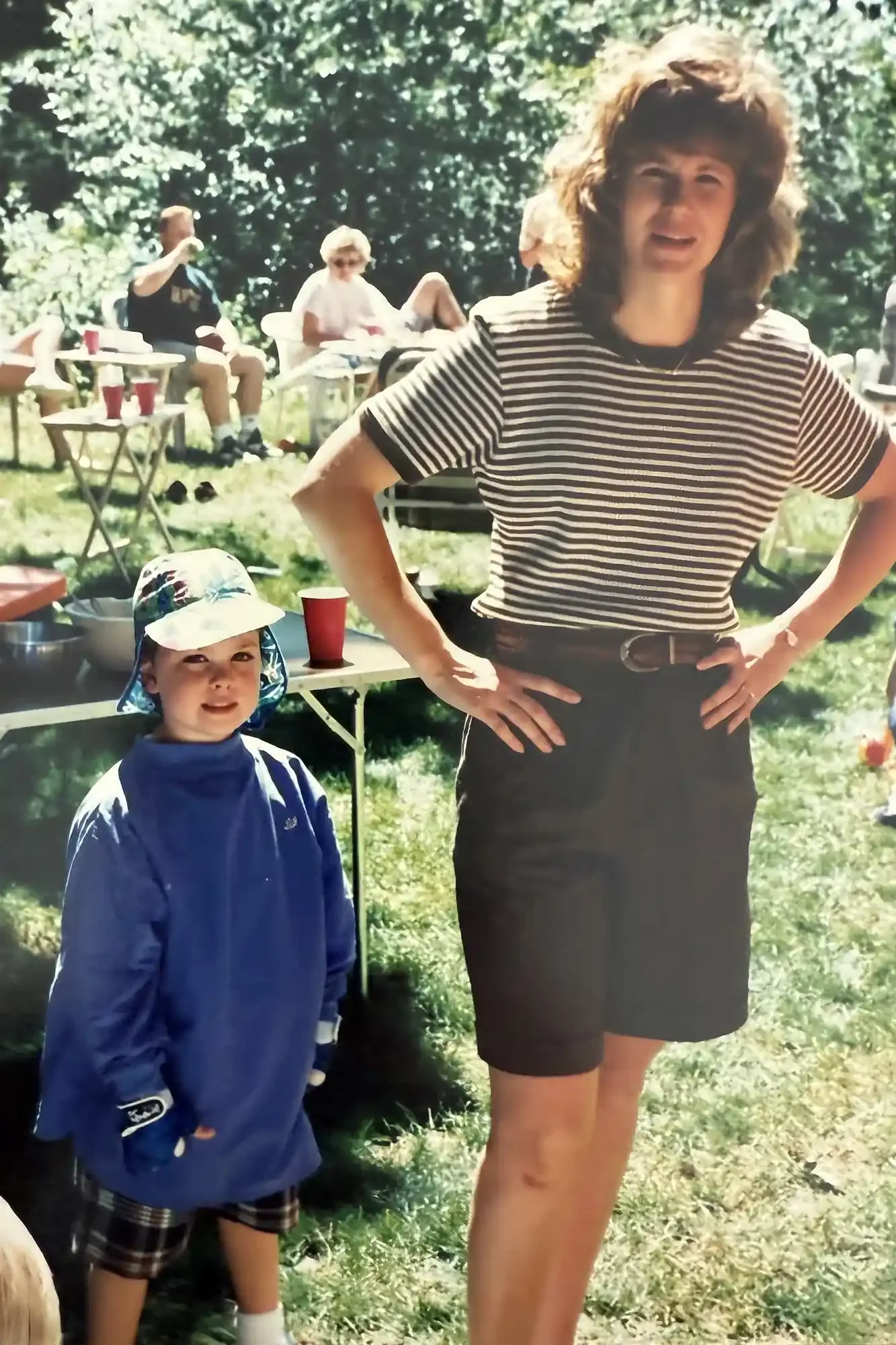
Leppert in 1996, with his mom, covered up in the summer sun.
His parents first realized something was wrong when Leppert was a toddler. After spending a short time splashing around in a kiddie pool, "I started screaming bloody murder," he says. "The next day, my hands looked like little boxing gloves."
By the age of 5, Leppert was diagnosed with EPP, a condition that affects only about 1 in 74,000. EPP is caused by an enzyme deficiency that leads to a buildup in the skin of natural chemicals called porphyrins that can cause symptoms when exposed to sunlight or even some artificial light.
As a kid, Leppert had to skip recess and outdoor gym classes. If his class went outside for a fire drill, he'd stay in. Summer camp, beach vacations and summer birthday parties were out of the question
"My basement became like a second home in the summer," says Leppert, who also has a younger sister with the condition. "Our family became night people."
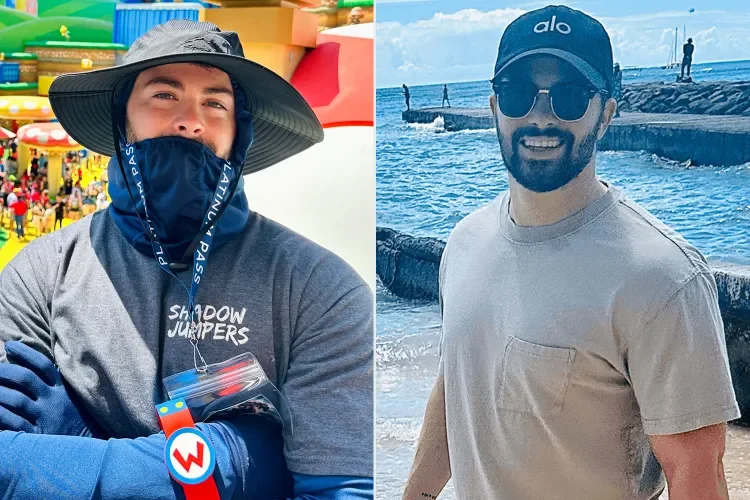
When he went outside, Leppert would wear a wide-brimmed hat, a shirt covering his neck and gloves. The rare times he didn't fully cover were excruciating.
In fifth grade, he went to an amusement park and forgot his gloves, By the time he got home, "I ran into the shower — I didn't even take off my clothes — to cool my hands." His hands were so swollen he couldn't bend them for five days.
A few years ago, while Leppert was sitting in the back of a friend's car on a roadtrip, sunlight poured through the window onto his face. Within 30 minutes, he was hunched over in agony, begging to be taken to the ER. "The doctor thought I was a drug addict going through withdrawal," Leppert says. "The symptoms are very similar when you're having a full-blown breakdown."
"My condition made me aware of how different I was," says Leppert, now a development manager for a television production company in Los Angeles. "But I think it also made me more empathetic. I realized that some people have it even harder. It made me a better person." It also made him more determined: "It pushed me to try to be the best at everything I could. I realized that this condition is going to make me stick out, so I decided to own it."
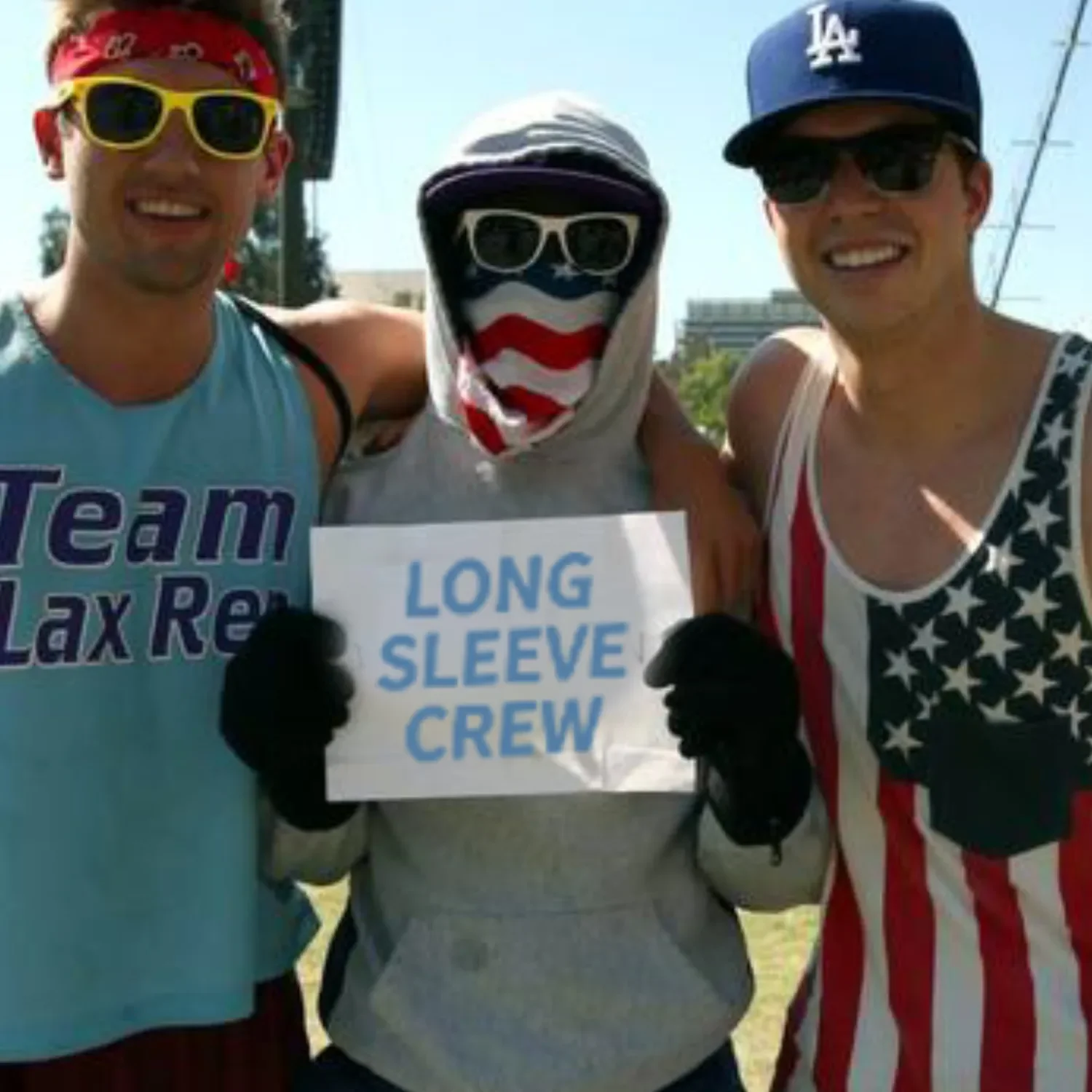
Leppert (center) with friends at an outdoor L.A. festival in 2014.
In 2017, Leppert started Shadow Jumpers, a volunteer-run nonprofit for kids and families living with photosensitivity. The original idea, he says, was a "make-a-wish" for the light-sensitive community. "A lot of families want to try new things, but there's a chance that you spend $5,000 to go on a vacation of a lifetime, and then your child gets a reaction and you're in the hotel room for the trip."
Shadow Jumpers takes away that risk. They've sent a boy who loves seashells on an all-expenses paid sun-safe trip to Myrtle Beach, giving him UV-protective clothing and setting up shade tents all along the beach so he could wander for shells. For another girl, whose dream was to ride a black horse in a field, they set up a free weekend at a ranch where she could ride as the sun was beginning to rise.
For other families, the group has helped with home and car renovations like adding tinted windows. And for the past two years, in partnership with the United Porphyrias Association, they've run a sun-free camp called Sun Escape, offering shaded or nighttime summer camp activities and free to all families who participate. "It's just as much a joy for me as it is for them," says Leppert says of the group's work.
The Stuhlsatz family from Wichita, Kansas, is one of more than 70 families Shadow Jumpers has helped since it began nine years ago. Siblings Clint and Hattie Stuhlsatz both live with EPP.
"It's a stinging, burning pain underneath your skin" says Clint, 14, describing the feeling of a reaction. "You kind of feel like an outcast because everyone's staring at you when you're wearing your long sleeves when it's 95 degrees out."
Says Hattie, 12, of living with EPP, "It's weird when you go to a pool in a hotel and everyone sees you with pants and a long sleeve shirt. And people can see how pale we are."
Shadow Jumpers sent the family to Disney World, where they were given UV-protective clothing, umbrellas and fast passes so they didn't have to stand in the sun to wait for a ride. And the first ever summer camp that Clint and Hattie, 12, were able to go to was Sun Escape. "They didn't worry about being self-conscious or embarrassed," says their mom, Allison. "It was very freeing for them, which warms my heart."
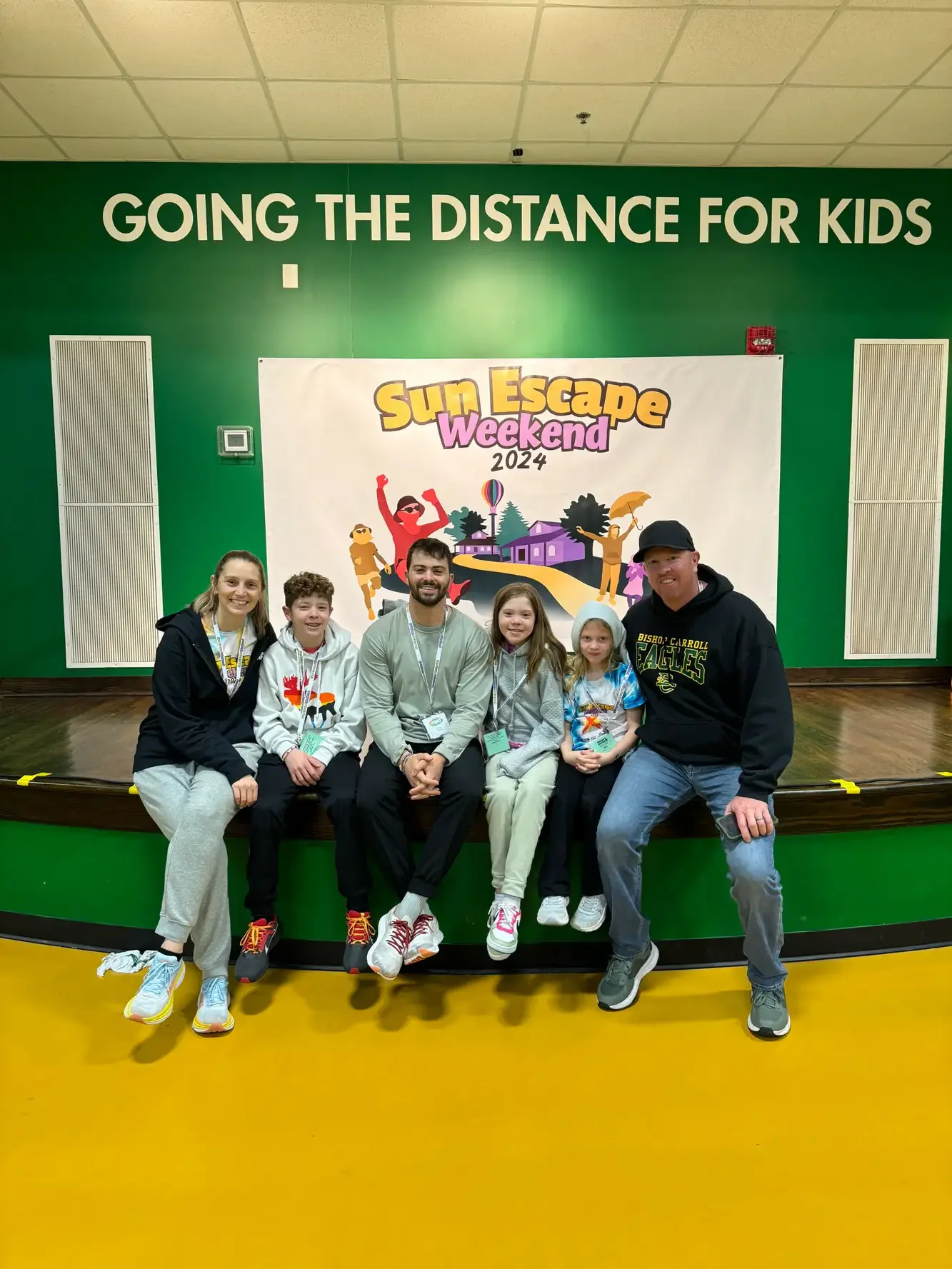
The Stuhlsatz family with Leppert at Shadow Jumper's sun-free camp.
About a year ago, Craig Leppert found his own, unexpected form of freedom after joining a clinical trial for an experimental drug to treat EPP. He'd been in six trials before — "I got the placebo every time" — with no success. But this time, he received the drug, called Bitopertin, manufactured by pharmaceutical company Disc Medicine. "It has been such a ride," Leppert says. "For a lot of people in our community, it's been a home run. It's almost like a miracle drug."
Since taking part in the trial, "I can take a walk with my fiancée and not worry about where the shade is," he says. He wears short sleeves, can lie out next to his apartment's rooftop pool, and he's made his first beach trip. His verdict? Thumbs down - but not because of the sun: "You're sweating and sand gets in everything."
"When you have EPP, you have to plan everything ahead, or clock where the sun is, where are my exit points if I feel something coming on," Leppert says. "You don't realize how much time and space it takes up in your head. So, it's so great to feel free and to do all these things."
Clint Stuhlsatz has had a similar experience.
He's part of the same clinical trial, and he says life has changed drastically. This fall, he ran on the cross-country team in a tank top and shorts, and was also able to work in his grandfather's garden for hours under the sun. "It feels amazing," he says. "Before I could go outside for 10 minutes a day and the only thing I relied on was talking to my family and playing video games. Now I can be outside for nine and a half hours and play with my friends and do everything a normal kid can do."
Hattie was also in the trial but received the placebo, so she's still waiting for her time in the sun. "I like seeing Clint go outside and be able to do all this stuff. I'm happy for him. But it's also kind of sad not being able to be out there with him."
Late last month, with an expansion in the trial, Hattie was able to start taking the drug, which is expecting a decision soon on FDA approval for use in those ages 12 and up. It will take several weeks for the medicine to build up sufficiently in Hattie's system to allow her to go outdoors unprotected, but she says she's ready for her new future: "I'm super, super excited," Hattie says.
Says their mom: "I've promised them a beach vacation. We're going somewhere where it's sunny — somewhere we've never been able to go before."